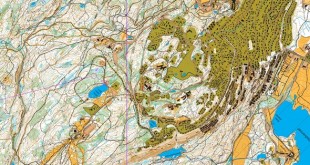
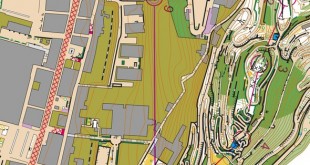
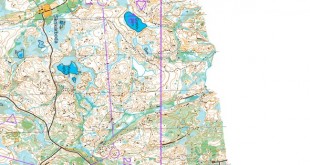
NOC sprint today from 14.45

Posted by Jan Kocbach, 03 May 2007@8:00

NOC2007logoet.gifToday the Nordic Orienteering Championships starts with the sprint distance at 14.45. The last runner, Matthias Müller, starts at 17.28. It has often been said that it is more difficult to win the Nordic Champs than the World Championships, as all the Nordic countries can have up to 10 runners at the start line in each discipline - so expect a tight fight for the medals! Note however, that none of the two reigning World Champions on the sprint distance are starting today ; Hanny Allston did not take the trip to Europe this spring, and Emil Wingstedt got a cold after 10Mila, and is trying to get well.

Startlist D21

     1  501704 Camilla Berglund               Sweden                          15:25:00
     2  502024 Karin Leonhardt                Austria                         15:26:00
     3  501666 Lene Bergersen                 Norway                          15:27:00
     4  502032 Dorota Kosinska                Poland                          15:28:00
     5  502011 Franziska Wolleb               Switzerland                     15:29:00
     6  502029 Yvonne Gunell                  Finland                         15:30:00
     7  501724 Helen Winskill                 Great Britain                   15:31:00
     8  501518 Radka Brozkova                 Czech Republic                  15:32:00
     9  501507 Ingvild Gjessing               Norway                          15:33:00
    10  501503 Marttiina Joensuu              Finland                         15:34:00
    11  500065 Rachael Elder                  Great Britain                   15:35:00
    12  501502 Paula Iso-Markku               Finland                         15:36:00
    13  501770 Anna Gornicka Antonowicz       Poland                          15:37:00
    14  501806 Eva Jurenikova                 Czech Republic                  15:38:00
    15  501609 Lene Moe                       Norway                          15:39:00
    16  501733 Seline Stalder                 Switzerland                     15:40:00
    17  501689 Ursula Polzer                  Austria                         15:41:00
    18  501559 Lina Bäckström                 Sweden                          15:42:00
    19  501696 Iveta Duchova                  Czech Republic                  15:43:00
    20  501582 Line Hagman                    Norway                          15:44:00
    21  501812 Pinja Satri                    Finland                         15:45:00
    22  501594 Rasa Ptasekaite                Lithuania                       15:46:00
    23  501834 Bodil Holmström                Finland                         15:47:00
    24  501604 Tiina Laas                     Estonia                         15:48:00
    25  501515 Anna Mårsell                   Sweden                          15:49:00
    26  501784 Sara Gemperle                  Switzerland                     15:50:00
    27  502037 Ingunn Hultgren Weltzien       Norway                          15:51:00
    28  501758 Karoliina Sundberg             Finland                         15:52:00
    29  501700 Anita Seebröck                 Austria                         15:53:00
    30  501740 Lea Müller                     Switzerland                     15:54:00
    31  501628 Anne Marie Bleken              Norway                          15:55:00
    32  501561 Pippa Whitehouse               Great Britain                   15:56:00
    33  500163 Zdenka Stara                   Czech Republic                  15:57:00
    34  501713 Monika Depta                   Poland                          15:58:00
    35  501862 Lena Eliasson                  Sweden                          15:59:00
    36  501886 Ane Linde                      Denmark                         16:00:00
    37  501607 Helen Bridle                   Great Britain                   16:01:00
    38  501619 Inga Kazlauskaite              Lithuania                       16:02:00
    39  501783 Riina Kuuselo                  Finland                         16:03:00
    40  500145 Simone Niggli                  Switzerland                     16:04:00
    41  500076 Anne Margrethe Hausken         Norway                          16:05:00
    42  501543 Heli Jukkola                   Finland                         16:06:00
    43  500157 Martina Fritschy               Switzerland                     16:07:00
    44  500170 Marianne Andersen              Norway                          16:08:00
    45  501683 Kajsa Nilsson                  Sweden                          16:09:00
    46  501534 Anne Konring Olesen            Denmark                         16:10:00
    47  501596 Elise Egseth                   Norway                          16:11:00
    48  501605 Dana Brozkova                  Czech Republic                  16:12:00
    49  500188 Signe Søes                     Denmark                         16:13:00
    50  502030 Emma Engstrand                 Sweden                          16:14:00
    51  502047 Minna Kauppi                   Finland                         16:15:00
    52  501748 Helena Jansson                 Sweden                          16:16:00
    53  501567 Katri Lindeqvist               Finland                         16:17:00

Startlist H21

   101  501573 Martin Pongratz                Austria                         16:25:00
   102  501587 Christian Ott                  Switzerland                     16:26:00
   103  501754 Jacek Nowak                    Poland                          16:27:00
   104  501808 Mike Smith                     Canada                          16:28:00
   105  501772 Jeppe Borch                    Denmark                         16:29:00
   106  501673 Jan Troeng                     Sweden                          16:30:00
   107  501571 Markus Lang                    Austria                         16:31:00
   108  502050 Scott Fraser                   Great Britain                   16:32:00
   109  501852 Jörgen Wickholm                Finland                         16:33:00
   110  501533 Michal Horacek                 Czech Republic                  16:34:00
   111  501530 Peter Horstmann                Denmark                         16:35:00
   112  501681 Anders Skarholt                Norway                          16:36:00
   113  501717 Vesa Taanila                   Finland                         16:37:00
   114  501626 Dries Van der Kleij            Belgium                         16:38:00
   115  501894 Marcin Richert                 Poland                          16:39:00
   116  502005 Pasi Ikonen                    Finland                         16:40:00
   117  502023 Baptiste Rollier               Switzerland                     16:41:00
   118  501516 Wojciech Dwojak                Poland                          16:42:00
   119  501680 Jan Prochazka                  Czech Republic                  16:43:00
   120  501815 Mattias Karlsson-2             Sweden                          16:44:00
   121  501753 Felix Breitschädel             Austria                         16:45:00
   122  501890 Martin Johansson               Sweden                          16:46:00
   123  501616 Michael Sørensen               Denmark                         16:47:00
   124  501677 Jan Sedivy                     Czech Republic                  16:48:00
   125  501667 Janusz Porzycz                 Poland                          16:49:00
   126  501517 Mats Haldin                    Finland                         16:50:00
   127  500139 Wil Smith                      Canada                          16:51:00
   128  501549 Jon Duncan                     Great Britain                   16:52:00
   129  501697 Rasmus Søes                    Denmark                         16:53:00
   130  501611 Martin Binder                  Austria                         16:54:00
   131  501737 Marius Bjugan                  Norway                          16:55:00
   132  501811 Graham Gristwood               Great Britain                   16:56:00
   133  501586 Jonne Lakanen                  Finland                         16:57:00
   134  501578 Anders Holmberg                Sweden                          16:58:00
   135  502018 Tomas Dlabaja                  Czech Republic                  16:59:00
   136  501584 Kim Fagerudd                   Finland                         17:00:00
   137  501621 Jan Zazgórnik                  Austria                         17:01:00
   138  501871 Patrick Goeres                 Canada                          17:02:00
   139  501884 René Rokkjær                   Denmark                         17:03:00
   140  502043 Jonas Pilblad                  Sweden                          17:04:00
   141  501508 Liutauras Bilevicius           Lithuania                       17:05:00
   142  501779 Aleksander Bernaciak           Poland                          17:06:00
   143  501532 Håvard Lucasen                 Norway                          17:07:00
   144  501583 Gernot Kerschbaumer            Austria                         17:08:00
   145  501714 David Schneider                Switzerland                     17:09:00
   146  500004 Pert Losman                    Czech Republic                  17:10:00
   147  501606 Thomas Jensen                  Denmark                         17:11:00
   148  500159 Audun Bjerkreim Nilsen         Norway                          17:12:00
   149  501547 Wojciech Kowalski              Poland                          17:13:00
   150  501537 David Andersson                Sweden                          17:14:00
   151  991662 Jarkko Huovila                 Finland                         17:15:00
   152  501521 Peter Öberg                    Sweden                          17:16:00
   153  501613 Daniel Hubman                  Switzerland                     17:17:00
   154  501536 Chris Terkelsen                Denmark                         17:18:00
   155  501741 Jamie Stevenson                Great Britain                   17:19:00
   156  501837 Tero Föhr                      Finland                         17:20:00
   157  501514 Carl Waaler Kaas               Norway                          17:21:00
   158  500057 Matthias Merz                  Switzerland                     17:22:00
   159  500134 Mikkel Lund                    Denmark                         17:23:00
   160  502026 Øystein Kvaal Østerbø          Norway                          17:24:00
   161  501774 Claus Bloch                    Denmark                         17:25:00
   162  501744 Audun Hultgren Weltzien        Norway                          17:26:00
   163  501738 Tuomas Tervo                   Finland                         17:27:00
   164  501785 Matthias Müller                Switzerland                     17:28:00

Links:

Reminder: World of O Mobile

Posted by Jan Kocbach, 27 Apr 2007@18:00

10mila.gifFor all of you going to Tiomila this weekend: At http://mob.worldofo.com you can access “World of O” from your mobile phone, giving you the latest 6 news items at World of O. Each file is only about 6 Kb. To get only pages from Sweden (including news from the 10Mila page), use http://mob.worldofo.com/C_SWE.html.

DSC_0451_s.jpg

Macr-o: A step forward for orienteering?

Posted by Jan Kocbach, 23 Apr 2007@10:00

FF_s_s.jpgMacr-o orienteering is a further development of the micr-o concept, a concept originally developed mainly to market orienteering as a better TV sport. Macr-o is however something very different from micr-o. The motivation here is not mainly to promote orienteering as a TV sport, but rather macr-o is brought forward as a gaffling principle, to split up groups of runners running together, and to increase the amount of fine orienteering required. This is motivated partly by the fact that medals have been decided due to groups of runners running together in recent world championships.

The first test of macr-o in an orienteering competition was at the long distance at “Norwegian Spring” at the 15th of April this year. There have been quite heated discussions about this, as “Norwegian Spring” was both a WRE race and a test race for the Open Nordic Championships for the Norwegian Team. The biggest controversy in this regard has been the fact that Macr-o is actually a form of gaffling, and that runners run different courses. However, the organizers had gotten permission directly from the board of the Norwegian Orienteering Federation, and also gotten an “exception from rules” from the IOF for use of Macr-o in this single WRE competition as a test case.

In the 10 minute video below, the macr-o concept is briefly explained, and you see interviews with several of the world class elite runners at Norwegian Spring who tried out the novel concept for the first time.

(If loading is slow, please go directly to the video page)

Macr-o versus Micr-o
The Norwegian Orienteering Federation defines macr-o controls as micr-o controls used in a normal orienteering course on the normal map scale. Macr-o can be used in all disciplines, not only on the long distance. The runner can identify macr-o controls from the control description, as the code for macr-o controls are given as letters A, B, C and so on. In the forest, all macr-o controls in a macr-o cluster are marked with the corresponding letter instead of control code. The runners have to punch exactly one control in every macr-o cluster, if not they will be disqualified. Every wrong punch gives a penalty loop of about 30 seconds.

There are thus three main differences between macr-o and micr-o.

  • There is no change of map scale in macr-o.
  • Macr-o controls can be put anywhere in the course
  • All runners will not run the same course

macronof12_s.jpg

Unfairness?
This last point is the biggest controversy about macr-o. Many people find that a certain degree of unfairness is introduced by the fact that everybody does not run the same course. Even a few seconds in difference can be the difference between gold and 4th place in a World Championships. The inventors of macr-o handle the fairness issue by introducing the following rules for macr-o control placement:

  • The maximum difference in the courses for different runners shall be 10 meters as measured in OCAD
  • The difficulty shall be the same for the different controls
  • The type of terrain shall be the same for running in and out of the controls.

In addition, they point at the fact that there is a lot of randomness present in orienteering already, as the map is not perfect representation of the terrain, and you can loose a second even by running at the wrong side of a tree.

Below you find a brief analysis of the Macr-o course used at the long distance at Norwegian Spring. As you see from the analysis, there might have been a certain unfairness for some of the Macr-o controls.

macronof14c_s.jpg

Macr-o as a spreading method
When we look at Macr-o as a spreading method, there are two ways Macr-o controls can spread runners

  • Runners can be spread at the Macr-o controls, due to the fact that they have different controls, or due to the fact that they do not know if they have the same controls.
  • Runners can be spread due to getting a different number of penalty loops.

A full analysis of the split times is required to see if Macr-o really works as a spreading method - but from the people I talked to it actually seems that Macr-o works better as a spreading method than the short butterflies commonly used for spreading today. See the video above for answers from some runners.

Great fun
And what do the runners think about macr-o? All I have spoken to at Norwegian Spring, including myself, think this is great fun, and most even think it is better than micr-o. But due to the fairness issue, most runners add “for training” when saying that this is great fun. Thus, the fairness issue is definitely a challenge for the ones working for macr-o. Personally, I think macr-o will have to be further developed in a fair way to survive.

Analysis of the Macr-o course at Norwegian Spring

The statistical material is actually too small to make a full analysis of the Macr-o course, but as all information is given below, one can treat the material accordingly. Note that the numbers are not double-checked.

Macr-o control A
At Macr-o control A, there were two alternatives - and two blind controls (typically running in from the north). 13 of 48 runners (27%) who had the control 213 got a penalty loop at this control, whereas 11 of 44 runners (25%) who had the control 223 got a penalty loop. The controls are very close to another, and one can easily see from one control to the other. Thus, this seems to be a “fair” Macr-o control from my point of view.

AA_s.jpg

Macr-o control B
Again two alternatives at Macr-o control B (typically running in from the northeast). 10 of 69 runners (14%) who had control 204 got a penalty loop at this control, whereas 4 of 23 runners (17%) who had control 224 got a penalty loop at this control. Thus the controls seem to have approximately the same difficulty. However, as I see it, there may be different route choices to the two controls (coming in from the north or northwest), so there may be differences in split times? This is one of the controls were some runners have only seen their own control as said in the video above (I guess especially runners who had control 204).

Macr-o control C
Here there are three alternatives, and no blind controls (typically running in from the path southwest of the control). Error rates are similar for all three controls: 1 of 24 (4%) for 225, 1 of 45 (2%) for 205 and 2 of 23 (8%) for 215. As for Macr-o control A, the controls are quite close, and you can see from control to control. Again I think this is a quite fair Macr-o control.

Macr-o control D
Here all runners have the same control (typically running in from the southwest), and there are two blind controls. 15 of 92 runners (16%) did an error here. As all runners have the same control here, one would think that Macr-o control D is definitely a fair Macr-o control. However, some may still argue that this is not completely fair, as runners choosing different route choices get different difficulty as some will see a blind control and some not. However, again I personally think this is a fair Macr-o control.

Macr-o control E
At Macr-o control E, there are three different controls - running in from the west. Here 12 of 45 (27%) did an error at control 217, 1 of 24 (4%) at control 207 and 0(!) of 23 (0%) did an error at control 227. Looking at the map, I think it is clear to see why more people did an error at control 217. There are two controls at the same detail (two sides of the depression), and you typically run through both the other controls before your control when going to control 227. From my point of view, this Macr-o control is not a fair control.

Actually, I got a penalty loop at this control as well. I punched the blind control at the other end of the depression, after running on compass from the path crossing. Another aspect here is that you get a significantly longer way to run for control 227 than for the other controls if you decide to use the path crossing as attack point as I did.

Macr-o control F
Macr-o control F had two alternatives and two blind controls - running in from the south. For 208, 7 of 24 runners (29%) did an error, whereas 7 of 68 runners (10%) did an error for control 218. Thus again, it seems like there is a difference in the errors for these two controls - and again there are most errors for the last control as seem from the direction people come into the control. Typically, people punch the first control they find if they are uncertain about where they are - rather than risking to search for minutes…

Penalty loop distribution

Below you see how many runners had how many penalty loops:

  • 0 penalty loops: 37 runners
  • 1 penalty loop: 36 runners
  • 2 penalty loops: 20 runners
  • 3 penalty loops: 2 runners
  • 4 penalty loops: 1 runner
  • 5 and 6 penalty loops: Nobody

Conclusion

The statistical material is too small to make a full analysis regarding fairness, and I have also only talked to around 20 of the total of 100 runners regarding Macr-o as a spreading principle. I will nevertheless try to make a small conclusion about the Macr-o experiment at Norwegian spring:

  • Fairness: Based on my analysis of both penalty loops statistics and the map around the controls, it seems to me that 4 out of 6 Macr-o controls were quite fair. The two last controls were not completely fair as I see it, and I think it would have been quite embarrassing if a gold medal in a World Championship had been decided due to the gold medalist having the easier Macr-o control E and the silver medalist the most difficult Macr-o control E.
  • Spreading: Interviews with runners (some of which you see in the video above), gave the information that about 50% of the runners did not see anybody else around the Macr-o controls at all, so there was no information to be gained from this. Of the ones who saw runners around the Macr-o controls or around the penalty loop region, actually quite a few found that the Macr-o controls worked as a spreading mechanism. But again, a few found that it worked opposite of the wanted effect. However, in total, Macr-o seems to be better at spreading runners than butterflies. Last time I did similar questions at a competition with butterflies, the answer from most runners were that the butterflies helped them to get together with other people rather than spreading them. Again, these are subjective answers from runners, but this gives an indication as to the mechanisms.

EE_s_s.jpgAs an overall conclusion, I have to say that there are promising elements in Macr-o - the big downside being the fairness issue. I think Macr-o felt much more like the natural part of an orienteering race than Micr-o, and many of the runners I talked to felt the same way. A race with Macr-o is actually just like a normal orienteering race where you have to be a bit more concentrated at some controls. There is no awkward change of map scale, you don’t loose your flow, and it introduces certain interesting tactical aspects into orienteering.

However, I don’t think Macr-o will survive in its present form as a gaffling method in individual races. All runners will have to run the same course, as I see it. If Macr-o is used, and everybody runs the same Macr-o course, there would still be some spreading left due to different runners having a different number of penalty loops. If Macr-o controls are put as early as possible in the course and in large butterflies with map exchange, and if the penalty loops are at about 2/3 of the complete course, Macr-o would give the maximum benefit for spreading runners as far as I see it.

Here is my suggestion for how you can combine Macr-o where every runner runs all the same splits and a long butterfly variant with map exchange (Update: This spreading method is called “Ultunametoden” - more info here [swedish]). Half of the runners will have the controls in the way given with purple numbers, the other half of the runners in the way given with blue numbers:

The half with blue numbers will have these two maps. Note that the runners will not know when they are inside a butterfly. By combining this with a fair type of Macr-o in addition, I think it would be possible to confuse the runners enough that you could not just run without thinking:

gaffl2_s.jpg

I am also unsure if Macr-o will give a lot as a gaffling principle for relays if this leads to gaffling controls being put closer together than today.

Note that all opinions given in this analysis are purely my personal opinions, and they are not in any way the opinions of the Norwegian Orienteering Federation or the people behind Macr-o. I would also like to thank the organizers of Norwegian Spring, who let me get access to part of the statistical material from Norwegian Spring to make this analysis.

Please add your comments in this matter below! I have also started a discussion thread over at Attackpoint where you can further discuss the matter.

Results, including number of penalty loops for each runner

Resultatliste

Norwegian Spring, SOLrenningen

D21-E1

Plass Navn Klubb Tid Etter Strafferunder

1 Anne Margrethe Hausken Bækkelagets SK 1:13:54 2

2 Marianne Andersen Nydalens SK 1:14:58 01:04 0

3 Line Hagman NTNUI 1:16:58 03:04 0

4 Marianne Riddervold Fredrikstad SK 1:17:44 03:50 0

5 Elisabeth Ingvaldsen Nydalens SK 1:17:49 03:55 0

6 Hanne Staff Bækkelagets SK 1:20:31 06:37 1

7 Elin Bjerva Bækkelagets SK 1:23:23 09:29 0

8 Ingvild Gjessing Nydalens SK 1:23:28 09:34 0

9 Birgitte Husebye Fredrikstad SK 1:23:48 09:54 0

10 Marte Balchen Bækkelagets SK 1:25:02 11:08 1

11 Lene Bergersen Wing OK 1:25:23 11:29 0

12 Anne Marie Bleken Bækkelagets SK 1:26:39 12:45 0

13 Ingunn Fristad Halden SK 1:26:43 12:49 3

14 Irene Øhrn Arnevik Kristiansand OK 1:27:01 13:07 1

15 Helen Bridle Göteborg Majorna OK 1:27:34 13:40 1

16 Linda Antonsen Bækkelagets SK 1:27:45 13:51 1

17 Marte Grande Østby NTNUI 1:28:50 14:56 0

18 Hanne Nøvik NTNUI 1:29:48 15:54 0

19 Cassie Trewin Bækkelagets SK 1:30:10 16:16 0

20 Karianne Hauge Halden SK 1:32:30 18:36 1

21 Karianne Ruud Fredrikstad SK 1:32:39 18:45 1

22 Hege Ask-Henriksen NTNUI 1:34:37 20:43 0

23 Christiane Trösse Gular, IL 1:34:48 20:54 2

24 Ingrid Bronebakk Halden SK 1:35:57 22:03 2

25 Hilde Hovdenak Modum OL 1:36:00 22:06 2

26 Karina Nordrum Larvik OK 1:37:24 23:30 2

27 Ane Baldishol Brevig NTNUI 1:39:04 25:10 2

28 Ine Hovi Ås-UMB Orientering 1:39:58 26:04 2

29 Lone Brochmann Heming/Njård OL 1:41:38 27:44 0

30 Heidi Ackenhausen Halden SK 1:42:24 28:30 2

31 Inga Ekeberg Schjerve NTNUI 1:44:35 30:41 1

32 Lene Godager Løten OL 1:45:09 31:15 0

33 Ingvild Tømta Raumar OL 1:51:12 37:18 1

34 Line Nybakken Ås-UMB Orientering 1:51:37 37:43 1

35 Katja Ekroll Jahren NTNUI 1:56:21 42:27 2

36 Annemarie B. Madsen Ås-UMB Orientering 2:01:22 47:28 2

37 Helen Margrethe Schjelderup Nord-Østerdal OK 2:04:58 51:04 1

DSQ Ragnhild Utstumo Ås-UMB Orientering 47:49

DSQ Susanna Honkanen MS Parma 1:47:54

Antall 39 Påmeldte: 43 Startende: 39

H21-E1

Plass Tid Etter Strafferunder

1 Emil Wingstedt Halden SK 1:28:21 0

2 Holger Hott Johansen Kristiansand OK 1:31:46 03:25 0

3 Hans Trøan Nydalens SK 1:33:29 05:08 2

4 Øyvind Helgerud Halden SK 1:34:24 06:03 1

5 Audun Weltzien Tyrving, IL 1:35:19 06:58 1

6 Ivar Haugen Kristiansand OK 1:35:30 07:09 2

7 Håvard Lucasen Ås-UMB Orientering 1:36:25 08:04 1

8 Lukas Bartak Halden SK 1:37:16 08:55 0

9 Marian Davidik Halden SK 1:37:21 09:00 0

10 Marius Bjugan Halden SK 1:37:48 09:27 0

11 Sindre Saksæther Halden SK 1:37:59 09:38 0

12 Tore Sandvik Halden SK 1:38:00 09:39 0

13 Anders Skarholt Södertälje Nykvarn 1:38:03 09:42 1

14 Carl Waaler Kaas NTNUI 1:38:48 10:27 0

15 Stig Alvestad Wing OK 1:40:12 11:51 1

16 Felix Breitschädel NTNUI 1:41:34 13:13 0

17 Øystein Pettersen Kristiansand OK 1:41:35 13:14 0

18 Jon Pedersen Trøsken IL 1:41:55 13:34 1

19 Øystein Sørensen Bækkelagets SK 1:42:05 13:44 0

20 Jostein Moe Kristiansand OK 1:42:19 13:58 0

21 Øystein Kristiansen MS Parma 1:42:56 14:35 1

21 Bjørnar Valstad Bækkelagets SK 1:42:56 14:35 1

23 Arild Nomeland Kristiansand OK 1:43:20 14:59 0

24 Øyvind Stokseth Halden SK 1:43:27 15:06 2

25 Henrik Ottesen Fredrikstad SK 1:43:30 15:09 0

26 Jarl Magnus Berge Turun Metsänkävijät 1:43:45 15:24 1

27 Østhagen Sindre Fredrikstad SK 1:44:16 15:55 2

28 Thormod Berg Nydalens SK 1:44:38 16:17 1

29 Ulf Brenna Bækkelagets SK 1:44:51 16:30 0

30 Vidar Solberg Bækkelagets SK 1:45:32 17:11 1

31 Jim Øystein Nybråten Bækkelagets SK 1:45:42 17:21 1

32 Per Olaussen Fredrikstad SK 1:46:55 18:34 1

33 Rune Nygaard Gular, IL 1:46:59 18:38 1

34 Andreas Høye Kristiansand OK 1:47:28 19:07 2

35 Mats Haldin Halden SK 1:47:35 19:14 1

36 Bent Olav Aamodt Fredrikstad SK 1:47:55 19:34 3

37 Espen Fiskum NTNUI 1:49:00 20:39 2

37 Lars Øivind Amundsen Trøsken IL 1:49:00 20:39 4

39 Kristian Kullerud NTNUI 1:49:13 20:52 0

40 Anders Tiltnes SNO 1:49:31 21:10 0

41 Daniel Marston Bækkelagets SK 1:51:46 23:25 0

42 Anders Einum NTNUI 1:52:55 24:34 1

43 Vitek Pospisil OK Ravinen 1:53:27 25:06 2

44 Jan-Egil Wagnild Wing OK 1:55:27 27:06 0

45 Tore Mo Østmarka OK 1:58:45 30:24 1

46 Erik Lima Ganddal IL 1:59:45 31:24 1

47 Martin Schälli Halden SK 2:00:41 32:20 1

48 Dag Solberg Bækkelagets SK 2:01:15 32:54 1

49 Magnus Hov Halden SK 2:02:48 34:27 1

50 Mike Smith Kristiansand OK 2:03:31 35:10 0

51 Kristoffer Fiane Pedersen Grane, IK 2:04:44 36:23 2

52 Kim André R. Sveen Gjø-Vard OL 2:07:27 39:06 0

53 Øyvind Lund NTNUI 2:11:02 42:41 1

54 Jan Kocbach Fana IL 2:19:25 51:04 2

55 Øystein Jaren Samuelsen NTNUI 2:24:53 56:32 1

DSQ Jørgen Frøyd Nydalens SK 14:25

DSQ Vegard Brox Tyrving, IL 25:07

DSQ Eirik Watterdal Bækkelagets SK 26:41

DSQ Bjørn Eriksen Halden SK 1:07:55

DSQ Torben Wendler Halden SK 1:33:58

DSQ Christian Kahrs Fredrikstad SK 1:37:46

DSQ Torbjörn Sagberg SNO 1:43:26

DSQ Anton Bjartnes Verdal OK 1:46:02

DSQ Csaba Gösswein Østmarka OK 1:52:00

Antall 64 Påmeldte: 65 Startende: 64

More Finnish and Danish NOC tests ++

Posted by Jan Kocbach, 22 Apr 2007@8:00

soes.jpgSaturday there were Finnish NOC tests long distance (won by Petteri Muukkonen and Minna Kauppi), Elitserien in Sweden (won by David Andersson and Simone Niggli-Luder), as well as Danish NOC tests long distance (same venue as Elitserien in Sweden - won by Chris Terkelsen and Signe Søes). Parallel to Elitserien in Sweden, there was also Silva Junior Cup, where Czech junior world champion from 2006 Jan Benes - portrayed at woO-TV some time ago - showed that his shape is coming by beating all the best Swedish juniors with more than a minute on their home ground.

If you know where to find maps/courses for the events where maps are not yet listed - please add a comment below.

Tervo and Kauppi in Finnish testruns NOC

Posted by Jan Kocbach, 21 Apr 2007@8:00

finsprint.jpgThis weekend there are Finnish testruns for the Open Nordic Champs. In the sprint on Friday, victories went to Tuomas Tervo and Minna Kauppi. Read more:

10Mila live on Norwegian TV

Posted by Jan Kocbach, 20 Mar 2007@20:15

10mila_1.jpg
The new norwegian TV channel TV2 SPORT today announced that they will transmit 10Mila live. - 10 hours, 10 orienteers on every team, is the message from the big boss in the sport department of TV2 - Bjørn Taalesen. - When we get a separate TV channel for sport, there are possibilites for some experimenting, Taalesen said at the press conference today.

pressekonferans_s.jpgTV2 - the owner of TV2 SPORT - is the channel that had high flying plans for a fantastic live transmission from this years second world cup event in Hovden, as you could read about in a previous article at World of O, “Live TV with 14 cameras and Micro” - but ditched the plans. Thus, TV2 is also one of the main reasons for the micr-o experiment in Norwegian and international orienteering. Some orienteers had hoped that micr-o would slowly die when TV2 lost interest for orienteering - but this announcement by TV2 SPORT shows that orienteering still has a future at TV2 - and thus the fight around micr-o (and now also macr-o) will continue.

Photos: Press release from the Norwegian Orienteering Federation

How do you want to punch?

Posted by Jan Kocbach, 14 Mar 2007@10:00

tio_1.jpgThere is an interesting discussion going on over at Attackpoint regarding the future of punching in orienteering.
[As you might have noticed, you now get to see the latest messages in several of the most important orienteering forums here at World of O (just scroll down to the day before yesterday) - and based on my server logs, quite a few of you are already following the forums this way.]

Before you head over there to join the discussion about e-punching, here is a short summary about the starting point for the discussion:

  • The starter of the discussion, “Jagge”, has a problem with both e-punching systems available today: SI and EMIT. The point here is not a discussion about how complicated/fast it is to punch, but rather about how to get a failsafe problem with a 100% backup solution.
  • SI 1: In some cases, competitors have been DQ’ed even if they were at the control and had the SI stick inside the control unit for a time which should normally be long enough (see Tiomila video below).
  • SI 2: In other cases, runners have used extra time to make sure they had a punch, and lost many seconds due to this (a case of a lost victory in a PWT race is given in the discussion)
  • EMIT: With the display units, people tend to check at the unit if they have a valid punch - and if not, they go back to punch again, and loose time in the same way as described for the SI unit. The good thing about the EMIT system is that you have a paper-backup, so you don’t actually have to run back if you know that your first punch was good enough to get the mechanical backup…

The perfect system should therefore be

  • No instant feedback: No way to check if you have got a valid punch while you are running - thus all should use the same time for punching.
  • Mechanical backup: A 100% mechanical backup solution, so that there is no risk for people being DQ’ed when they were at the control and punched according to the rules (Note that “punch according to the rules” for SI is that you get the correct feedback).

A last point: The future is wireless! EMIT is working on a wireless punching solution, and probably SI is as well(?). What about backup in this case?

Join the discussion:

Latest orienteering videos at World of O

Posted by Jan Kocbach, 21 Feb 2007@8:00

latestvideo_s.jpgVideos are getting more and more used within the orienteering sport as part of invitations, race reports, race analysis or just for fun. The number of orienteering videos at YouTube and other online Video Hosting sites is growing every day - a YouTube search for “Orienteering” at YouTube now gives nearly 300 hits. When I added a orienteering video from a local sprint race to YouTube about 11 months ago (now seen by more than 6000 according to YouTube), there were only a few orienteering videos at YouTube, in addition to a few videos hosted at other locations.

I am sure this development will continue in the coming years - as the orienteering community generally is technically oriented. With the latest feature in World of O I hope that World of O will help speeding up this development even more. From now on, the latest orienteering videos from YouTube will be shown at the World of O frontpage (tag your video “orienteering” to be included). This will hopefully motivate people further to add their orienteering videos.

Currently you find the latest videos when you scroll down the page to the day before yesterday on the main column. Click on a video to get up a small player. If this service is popular (please comment below), I will consider moving it further up in the page or into the right column. As of now, only YouTube videos are included, but other online video hosting services will be considered later on..

Position WRE competitions: Your help needed!

Posted by Jan Kocbach, 29 Jan 2007@8:00

evloc.jpgClose to all WRE competitions in Foot-orienteering are now entered into WoO Calendar - but quite a few of them are not entered with position. With YOUR help, all of these events can be positioned! This will make it easier for people to consider which WRE competitions to attend to, as they can see their exact position and also consider how to travel to them.

Follow this link to see all WRE competitions in WoO Calendar. All events which are not marked with a small globe , have no location. You can simply enter the location by pressing the change-symbol for the event, and pinpointing the event location at the map. Events with no location include (at the time of writing) events in Portugal, Spain, Israel, USA, Great Britain, Belgium, Serbia, Switzerland, Finland, Sweden, Bulgaria, Slovenia, France, Germany, Hungary, Latvia, Romania, Turkey, China and more. Please help pinpointing these events!

More events
Have you got a collection of events you want to add to WoO Calendar? For example all larger events in your country? Many events in South Africa are added in WoO Calendar. If you are planning to travel to South Africa, you will have no problem finding orienteering events - look at them in WoO Calendar here. Bulk addition of events through Excel-files is possible - please contact me for the format of the files - and I am sure we can arrange something!

Another step forward for Catching Features!

Posted by Jan Kocbach, 24 Jan 2007@8:45

other_gf_200.jpgToday the impressive winner maps in the Catching Features Map contest have been announced - and it looks like this map contest has been another step forward in making the orienteering simulator (or game - choose the one most appropriate for you) Catching Features (CF) even more realistic. Using the CF Map Editor - which you get along for free when you buy the game - the participants had 2 months time to make the best maps and terrain for CF in three different categories: “Middle Forest”, “Urban Sprint” and “Other”. - Some incredible CF-architecture work was done in the Urban category, making some of the most visually appealing CF maps to date, says the maker of Catching Features, Greg Walker, when commenting the CF Map contest contributions.

More and more realistic
Comparing the maps delivered by the participants in this Map contest with the early maps in CF (the ones you get when you download the demo version of CF), shows that CF maps have gotten a long way in terms of being more realistic - and also a lot more fun to play! And of course they are more and more usable for real orienteering training - a big leap forward in this regard was the release of the new OCAD-CF converter last fall, which makes it a kids game to convert real OCAD maps to playable CF maps. - CF maps continue to improve in realism and accuracy for a few reasons, Greg comments on this matter. - The new Ocad -> CF converter I released a few months ago makes it much easier to create the base CF areas for a good map. But thats not enough for the truly good maps (like those seen in the competition): it still takes some hard work afterwards to add in the extra details to make a perfect CF map. And the CF community is continuing to experiment and learn the best ways to do this, and so the resulting CF maps continue to get better!

urban_jw_s.jpg
The winner map “Ingalunda City” in the Urban Sprint category by Jari Williamsson.

Many Déjà-vus in the forest
There is still a long way to go to get a perfect orienteering simulation, but CF is already a valuable training tool for many top orienteers. It is well known that this years overall World Cup winner Thierry Gueorgiou has used CF extensively in his orienteering technical training - part of his exceptional orienteering technique may well be learned through playing CF. But others are following him. For example, it has been said that the Finnish team Veve - winners of last years Jukola relay, used CF to prepare for the Jukola relay. matthias.jpgAnother elite runner using CF extensively is Swiss Team runner Matthias Merz. According to an article written by Matthias in the Swiss magazine OL-Fachschrift (edition 12/06), he used CF to prepare for the Biofarm-Cup-Final 2006 (one of the most important Swiss races in 2006, held in the terrain of the WOC middle final in 2003 in Trin). - […] before the Biofarm-Cup-Final in Trin I trained with Catching Features. I think that I would have been able to run through the WOC race from 2003 without a map - I had played it that often at the computer. So I got many Déjà-vus in the forest. After the race, I even explained one of my competitors that I found an error in the forest, Matthias explains in the article. And who do you think won the Biofarm-Cup-Final 2006? Matthias Merz, of course…

He also tells how he did make large errors on the extremely difficult World Cup Final Long Distance - in Catching Features (he missed the real-world race due to exams). - With Catching Features, you can train how to generalize the map, and how to handle route choice problems in different problem types, Matthias concludes his article.

Cool orienteering statues
Now back to the CF Map contest: - Excellent. Houses with windows, doors, and chimneys, buildings (CF-shaped!), cars, parking lots, tram tracks, underpasses, more different textures than you can count, some very cool orienteering statues, road signs and store front signs, is Greg’s comment to Jari Williamsons winning map “Ingalunda City” in the Urban Sprint category. - Just remarkable. The best modeled CF map I’ve seen yet! Greg continues. For the people using CF regularly, it is no surprise that Jari Williamsson is among the winners in the Map Contest. Jari Williamsson is known as one of the best CF players and map makers, and also the man behind the CF-OCAD converter tutorial, which tells you how to convert an OCAD map to a playable CF map in a few simple steps.

forest_jv_s.jpg
The map “Sekotsuji” - winner of the “Middle forest” category by Jochen Verdeyen.

Jochen Verdeyen again
- Deliciously detailed contours, pits, knolls and little patches of stony ground. The course had lots of controls with quick direction changes all over the place. Tricky enough to be challenging, but enough detail to make it rewarding if you could read it all while running. Start and finish chutes were a nice addition, as was the spectator control, and a very nicely done splash screen made for a good intro. This were the comments of Greg Walker for the winner in the “Middle forest” category of the map contest - the map Sekotsuji, a Chinese map (Update: This map is Chinese according to the information given by Jochen Verdeyen in the map contest, but I got an email from a reader telling me it is the Japanese World Cup map from 2000 - and based on a quick internet search this is correct.) - the map submitteed by Jochen Verdeyen. For those of you who did not read the To JWOC with Catching Features article at World of O last autumn, Jochen is the same man who was featured in the article as the belgian junior who finished in a very surprising 4th place at the sprint at JWOC in Lithuania last summer, owing some of his improvements in orienteering technique to Catching Features.

other_gf_s.jpg
The winner map “1st Woman” in the “Other” category.

1st Woman
The last category in the CF map contest was the “Other” category. The winner in this category (and actually the only participant) was Greg Flynn with the map “1st Woman”. A very special orienteering map - to which the judge comments - It certainly delivers what it promises. May not be appropriate to play at work =).

Play it now!
I am sure that what is on the mind of many of you reading this article now, is to play these courses! So Greg, when can we compete on these fantastic maps? - Tomorrow! I uploaded the winners to the normal Competition system and we are going to run a series event there. The 3rd place maps will open on Thursday, the 2nd on Friday, and the 1st on Saturday. After all the races are complete early next week I’ll release all of the maps for download. For those of you interested: You find the tournament here - and can access the maps through the normal competition system in CF.

Note: Relevant links for this article are to be found below the interview!

Interview with Greg Walker - the man behind CF

greg.jpg
Jan: What do you see as the main limitations for getting even more realistic terrain in CF? Are you planning to release a new version of CF - and if - will this version then have more realistic terrain?

Greg: There are a lot of limitations on how realistic you can make terrain in CF, mostly because of the way the game engine was created. I started the CF project about 8 years ago, and have learned many things through trial and error. Since then I’ve mananged to fix some of the bigger limitations - to allow bigger and more complex maps - but there are still some fundamental problems that I can’t easily fix without rewriting the entire game engine. And at a few hundred thousand lines of code thats no easy task!

Also I have held back from adding some features to CF because it is limited by the video card hardware that people are using to run it. The original game was released with very low requirements so that you wouldn’t need the latest technology to run it, and I’ve been trying to keep it that way. So I’ve had to pass on adding more modern rendering techniques because they are not supported in the older video cards.

So the next big leap in realism will likely come in CF2, which yes, is definitely planned. At this point development on it is moving very slowly, as my time is split between several projects, so I’m still working on some of the base technology to be used for it. I have very big ambitions for what CF2 will be, we’ll just have to wait and see if they are possible =) But for now much of my time is split between working on the CF map converter and a third project (also orienteering related, but I can’t say much more at this point).

Jan: Was CF planned as a game or a training tool or both from the start? How does it feel to have developed a game which is actually used as a training tool for part of the world orienteering elite? Do you think CF will be used by even more top orienteers for technical training in the future when (if) the terrain models get even more realistic?

mc.jpg
Greg: It was planned as both. The originally released version of CF came with a few maps to run on for a fun game, but also had the map
randomizer to allow for lots of training on different maps. Since then I’ve improved the post-race course reviewing system, which I think allows for better analysis of your race, and also added the quickly-grown-huge online Competitions system, which is definitely both game + training.

I think its great that many people use CF for serious orienteering training. Obviously CF alone can’t make you a great orienteer, but I think like many other training techniques it can provide one element of a successful program. Its main advantage is that it allows you to experience terrain types that are not readily available in your local area. And as the realism of the terrain in the game improves in the future, this will certainly become even more useful.

Jan: Is your “real work” making computer games - or something completely different?

Greg: Yup, I work for a game development company called Pandemic Studios here in Los Angeles. My last two games were the two Star Wars Battlefront games, where I programmed the AI for all the bad guys.

Jan: I see from your Attackpoint training log that you are training quite seriously these days, and it looks like you are maybe trying to qualify for ski-woc in Russia. Any words about your ambitions as an orienteer?

Greg: Well, it certainly doesn’t snow very much here in LA, but I’m trying =)

Jan: Will you make it possible to import the new textured kml-models of buildings/cities being developed for Google Earth in CF?

Greg: This I actually looked into, but there isn’t an easy way to publicly access the model format data of all those buildings. Otherwise that would be a great resource!

Jan: Thanks a lot for your time, Greg. And keep up the good work!

(The picture of Greg Walker is taken from the Raid Across America 2006 Biography.)

Links:

« Previous PageNext Page »